








The mechanical evolution of Maria Sakkari
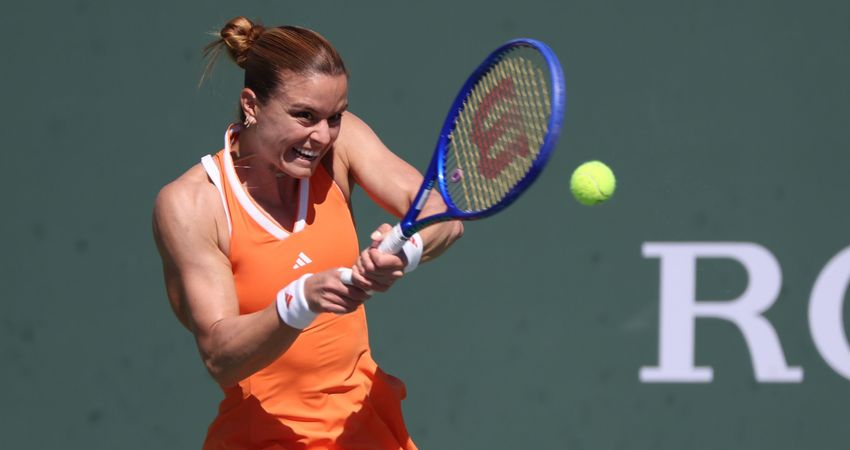

INDIAN WELLS, Calif. -- Maria Sakkari can still see the 19-year-old version of herself playing Angelique Kerber in Hong Kong. At the time, she believed her level was good enough to compete with anyone on tour, even if the results had yet to reflect it.
It was a career built on hope -- the raw, high-energy fuel of a young player trying to find her place. More than a decade later -- as Sakkari enters her 30s -- she has realized that hope alone is too fragile a foundation for the level she wants to maintain.
"When you’re 20 years old and you’re starting, yes, you have hope, because you don’t know," Sakkari said Saturday. "But I know what I’m capable of now. Once you’ve proved to yourself that you’ve done it consistently, then it’s not about hope anymore. It’s about belief."
That transition from possibility to conviction was tested during her 7-5, 6-0 win over Lilli Tagger. While Sakkari’s experience gave her the edge, the matchup was anything but a formality. Tagger, an 18-year-old Austrian wild card, arrived in the desert carrying the momentum of a steady ascent through the rankings following a WTA 250 final in Jiujiang and a W100 title in Fujairah already on her resume. A rare, stylish one-handed backhand had already helped her capture a first-round win here in Indian Wells.
Early test
Sakkari spent most of the opening set trying to find her range. Between the desert wind and an unfamiliar look across the net, it was a lot to process while shaking off the “heavy legs” of a first-round bye. Tagger, meanwhile, already had the benefit of a match under her belt and looked comfortable from the start.
Sakkari’s said afterward her turnaround in the second set was largely tactical. Tagger’s one-handed backhand is a rarity on the women’s tour, but once Sakkari began directing more pace into that wing, the match changed. She stopped fighting the desert wind, cleaned up the unforced errors and turned a tight contest into a 6-0 run.
The rebuild
The composure Sakkari is showing now is the result of a quiet gamble she took last fall. After a career largely spent in the Top 10, she chose to dismantle the most vital parts of her game, skipping tournaments to "start from zero" on her service motion and forehand. It was an admission that even a veteran needs to renovate to stay relevant.
"I still go into my old habits," she said. "I have to remind myself to just do what worked in preseason. But everything -- the technical part and the scheduling -- it all comes together. It makes you play your best tennis."
By narrowing her calendar and focusing on the quality of her work rather than the quantity of her points, Sakkari has found a clarity that paid off with a significant win over Iga Swiatek in Doha last month. Now, a rematch with Swiatek looms on Monday, and Sakkari is already anticipating the tactical adjustments the World No. 2 will bring.
"She’s for sure going to feel the pressure of trying to do something different," Sakkari said. "But I’m going to try to keep my level. That’s going to be my challenge."